| Svájci-Magyar
Együttműködési Program |
Folytatódik
a Svájci-Magyar Együttműködési Program II. időszak keretében
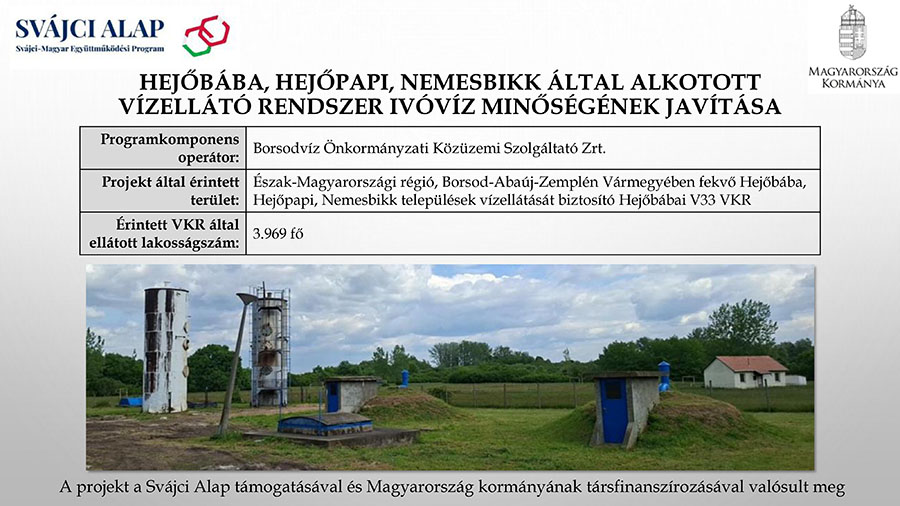
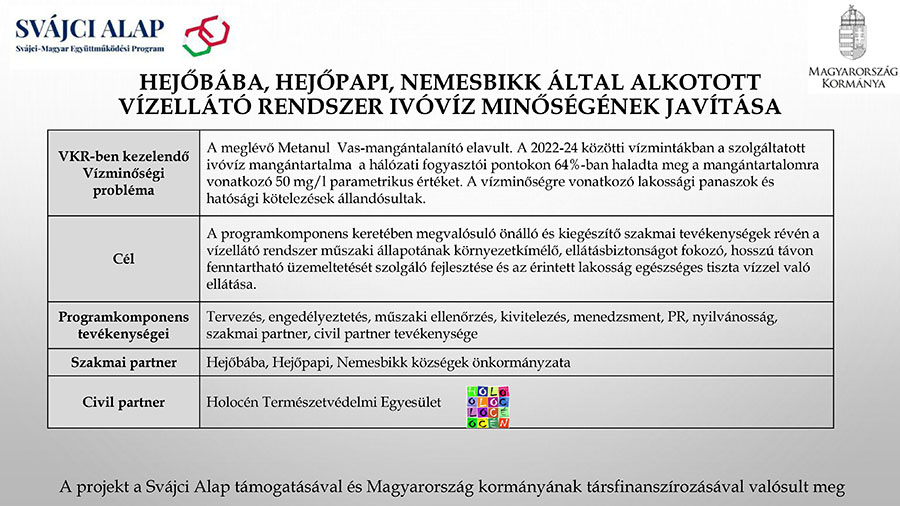
megvalósuló Hejőbába, Hejőpapi, Nemesbikk által alkotott vízellátó
rendszer ivóvíz minőségének javítása projekt előkészítése.
A Hejőbába, Hejőpapi és Nemesbikk községek mintegy 4000 lakosának
ivóvízellátását szolgáló 1991-ben létesült Hejőbábai vízmű vas-
és mangánmentesítő berendezéseinek állaga leromlott, a technológia
elavult, a tisztítás hatásfoka nem megfelelő, az üzemeltetése
költséges. Az évek óta tartó vízminőségi probléma az ivóvízhálózatokon
lerakódásokat, a fogyasztóknál elszíneződött, zavaros állapotú
vizet okoz. Az érintett lakosság egészséges, tiszta ivóvízzel
való ellátása és a vezetékes ivóvíz minőségének az 5/2023. (I.12.)
Korm.rendeletben előírt határértékeknek való megfelelés céljából
a Borsodvíz Zrt. sikeresen pályázott a Svájci-Magyar Együttműködési
Program II. időszak SM07-WWM jelű „Vízminőség-javítása Magyarországon”
program támogatási forrásaira „Hejőbába, Hejőpapi, Nemesbikk
által alkotott vízellátó rendszer ivóvíz minőségének javítása”
címmel. Az elnyert - vissza nem térítendő - Támogatás összege
nettó 639.851.536 Ft.
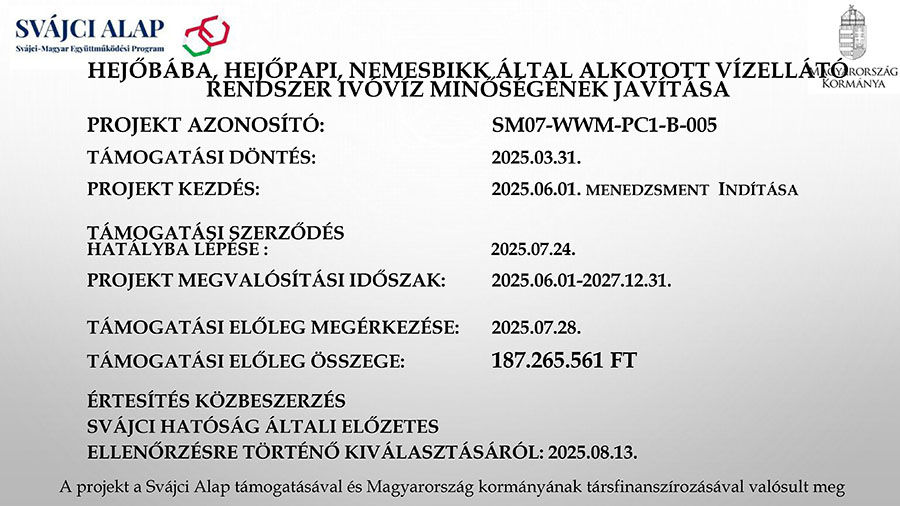
A projekt Támogatási Szerződése 2025.07.24-én lépett hatályba
– a projekt azonosító száma: SM07-WWM-PC1-B-005-, melyet a Borsodvíz
Zrt., mint főkedvezményezett a vízellátó rendszerhez tartozó
Hejőbába, Hejőpapi, Nemesbikk önkormányzatainak szakmai partneri,
a Holocén Természetvédelmi Egyesület civil partneri együttműködésével
és saját menedzsmentjének közreműködésével hajtja végre.
A 2025.06.01-2027.12.31. közötti időszakban sor kerül a meglévő,
elavult ivóvíztisztítás technológia korszerűsítésére és kapacitásbővítésére,
a vízműtelepi létesítmények műszaki állapotának felújítására,
új vízmű gépház építésére. Ennek eredményeként egy teljesen
automatizált, PLC vezérelt, távfelügyeleti rendszerrel ellátott
vízkezelő technológia valósul meg, a jogszabályi előírásoknak
megfelelő minőségű, egészséges, tiszta ivóvizet biztosítva közel
4000 lakos számára.
A Támogatási szerződés megkötését követően 2025. év második
felében szaktervező bevonásával elkészültek a beruházás engedélyezési
és kiviteli tervei, valamint megtörtént a hatósági engedélyek
beszerzése.
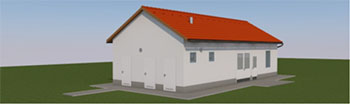
Az alábbi képen a hejőbábai vízműben épülő új vízkezelő épület
terve látható. A 80 m2 hasznos alapterületű, hagyományos szerkezetű
épület géptermében kerülnek elhelyezésre az új víztisztitó technológia
berendezései, továbbá a létesítményben kapnak helyet vegyszer
adagoló és szociális helyiségek is.
2026.
január 27-én újabb mérföldkőhöz érkeztünk, amely napon lezajlott
a projekt ünnepélyes, sajtónyilvános Projektnyitó rendezvénye.
A fórumra meghívást kaptak a Svájci partner, a szakminisztérium,
a Széchenyi Programiroda Nonprofit Kft. közreműködő szervezet
(továbbiakban: Közreműködő Szervezet), az engedélyező hatóságok,
a beruházó, az érintett önkormányzatok, valamint a helyi és
országos sajtó képviselői.
2026. márciusában megkezdődött a kivitelező kiválasztására irányuló
közbeszerzési eljárás dokumentációjának összeállítása. A pályázati
eljárásrend alapján az elkészülő dokumentációt be kell nyújtanunk
a Közreműködő Szervezet részére előzetes jóváhagyásra, melyet
követően indítható el a kivitelezői közbeszerzési eljárás.
A tervek szerint az eljárás sikeres lefolytatása után a kivitelezési
szerződéskötések 2026. szeptemberében várhatók. Ezt követően
a 2027. októberéig tartó időszakban zajlik a kivitelezés és
a hatóság által előírt próbaüzem, valamint a három település
teljes ivóvíz hálózatának tisztítása. Az üzemeltetéshez szükséges
hatósági engedélyek 2027.12.31-ig beszerzésre kerülnek.
A projekt megkezdése óta eltelt 1 éves időszakban a szakmai
partneri státuszban közreműködő önkormányzatok a munkatervük
alapján lefolytatott képviselő-testületi üléseken, lakossági
fórumokon és köz meghallgatásokon folyamatosan tájékoztatást
nyújtottak a lakosság számára a fejlesztés céljairól, előrehaladásáról
és elért eredményeiről.
A projektben civil partner státuszban közreműködő Holocén Természetvédelmi
Egyesület ezen időszakban számos iskolai és lakossági rendezvényt
bonyolított le, mely fórumokon széles körű célcsoport számára
nyújtottak ismereteket a környezeti fenntarthatóság, a természetvédelem
és víztakarékossági megoldások témakörében.
A
Svájci-Magyar Együttműködési Program II. időszak keretében megvalósuló
Hejőbába, Hejőpapi, Nemesbikk által alkotott vízellátó rendszer
ivóvíz minőségének javítása
Projekt azonosító: SM07-WWM-PC1-B-005
Projekt
összefoglaló
Program Operátor: Nemzeti Fejlesztési Központ
Közreműködő Szervezet: Széchenyi Programiroda
Tanácsadó és Szolgáltató Nonprofit Kft.
Programkomponens operátor/Kedvezményezett:
Borsodvíz Zrt.
A programkomponens végrehajtásában résztvevő szervezetek:
Szakmai partner:
• Hejőbába Község Önkormányzata
• Hejőpapi Község Önkormányzata
• Nemesbikk Község Önkormányzata
Civil partner:
• Holocén Természetvédelmi Egyesület
Projekt
által érintett terület: Az Észak-Magyarországi régióban,
Borsod-Abaúj-Zemplén Vármegyében fekvő Hejőbába, Hejőpapi, Nemesbikk
települések vízellátását biztosító víziközmű rendszer
A
programkomponens indokoltsága:
A mintegy 3969 lakos ivóvízellátását biztosító, 1991-ben létesült
hejőbábai vízmű vas- és mangánmentesítő berendezéseinek állaga
leromlott, a technológia elavult, a tisztítás hatásfoka nem
megfelelő, az üzemeltetése költséges. Az évek óta tartó vízminőségi
probléma az ivóvízhálózatokon lerakódásokat, a fogyasztóknál
elszíneződött, zavaros állapotú vizet okoz. A vízminőségre vonatkozó
lakossági panaszok állandósultak mindhárom településen.
Projekt
célja:
• az emberi fogyasztásra szánt víz minőségéről szóló Európai
Parlament és a Tanács (EU) 2020/2184 irányelvének és az 5/2023.
(I. 12.) Korm. rendeletnek (együttesen: nemzetközi és hazai
jogszabályok) történő megfelelés, a magas vas és mangán tartalom
miatt kifogásolt vezetékes ivóvízminőség javítása, ezáltal biztosítani
az érintett végfelhasználók (lakosság) részére az egészséges
tiszta ivóvizet.
• a programkomponens keretében megvalósuló önálló és kiegészítő
szakmai tevékenységek révén a hejőbábai vízellátó rendszer műszaki
állapotának környezetkímélő, ellátásbiztonságot fokozó, hosszú
távon fenntartható üzemeltetését szolgáló fejlesztése
Projekt
megkezdésének időpontja: 2025.06.01.
Támogatási szerződés hatályba lépése: 2025.07.24.
Támogatás összege (nettó): 639.851.536 Ft
Tervezett megvalósítási időszak: 2025.06.01
- 2027.12.31.(31 hónap)
A
2025-2027 között megvalósuló fejlesztés keretében sor kerül
a meglévő, elavult ivóvíztisztítás technológia korszerűsítésére
és kapacitásbővítésére, a vízműtelepi létesítmények műszaki
állapotának felújítására, melynek eredményeként egy teljesen
automatizált, PLC vezérelt, távfelügyeleti rendszerrel ellátott
vízkezelő technológia kiépítésére kerül sor.
A korszerűsítésre kerülő Vízkezelő tervezett mértékadó kapacitása
Qd max. = 500 m³/d.
A technológiáról lekerülő zagyvizek lepítésére egy újonnan létesülő
45 m3 térfogatú ülepítő-dekantáló tartály épül a vízmű területén,
melyből a zagyvíz az ülepítést követően a meglévő befogadó csatornába
kerül elvezetésre. A beruházásnak részeként a vízmű területén
meglévő 300 m3-es víztorony felújítása is elkészül.
A vízkezelő technológia elhelyezésére egy új, 70 m2 hasznos
alapterületű vízmű gépház épül. A hagyományos szerkezetű gépház
géptermében kerül elhelyezésre a 4 db vas-mangántalanító szűrőtartály.
Az erős- és gyengeáramú vezérlőszekrényeknek külön helyiség
létesül. A vegyszerek tárolása és adagolás céljára kültérre
nyíló vegyszeradagoló helyiségek lesznek leválasztva. Az épületben
helyet kapnak továbbá a szociális helyiségek (WC, mosdó), melyek
szennyvizei egy újonnan létesülő szennyvízgyűjtő aknába kerülnek,
ahonnan az elszállítás tengelyen történik.
Az Új komplex vas- és mangáneltávolító technológia üzembe helyezését
követően, a vízelosztó hálózatban hosszú évek alatt lerakódott
vas és mangán szennyeződések eltávolítása céljából a teljes
35,2 km ivóvíz hálózat mechanikai tisztítása, fertőtlenítése
elvégzésre kerül
A rekonstrukciós munkálatok során kerül elvégzésre a mechanikai
hálózattisztításhoz és fertőtlenítéshez szükséges meglévő hálózati
csomópontok átalakítása, felújítása, továbbá új mosató csomópontok
is kialakításra kerülnek. A rekonstrukciós munkák része továbbá
a három településen a szolgáltató által kijelölt régi, korszerűtlen
ivóvíz bekötővezetékek cseréje, közkifolyók felújítása és meglévő
vasbeton aknákban lévő elöregedett tolózárak cseréje.
|
 |
| Swiss-Hungarian
Cooperation Programme |

Improvement of the drinking water quality of the water
supply system serving the settlements of Hejőbába, Hejőpapi, and
Nemesbikk within the framework of the Swiss–Hungarian Cooperation
Programme (Phase II)
Project ID: SM07-WWM-PC1-B-005
Project summary
Programme Operator: National Development Centre
Implementing Agency: Széchenyi Programme Office
Consulting and Service Nonprofit Ltd.
Programme Component Operator / Beneficiary: Borsodvíz
Co. Ltd.
Organisations participating in the implementation of the
programme component:
Professional partners:
Municipality of Hejőbába
Municipality of Hejőpapi
Municipality of Nemesbikk
Civil partner:
Holocén Nature Conservation Association
Area affected by the project:
The water utility system providing the water supply for the settlements
of Hejőbába, Hejőpapi, and Nemesbikk, located in Borsod-Abaúj-Zemplén
County in the Northern Hungary Region.
Justification for the programme component:
The Hejőbába waterworks, established in 1991, which supplies drinking
water to approximately 3,969 residents, has deteriorated in condition.
Its iron and manganese removal equipment is outdated, the technology
is obsolete, the purification efficiency is inadequate, and its
operation is costly. The long-standing water quality problems
have caused sediment deposits in the drinking water network, resulting
in discoloured and turbid water for consumers. Complaints from
residents regarding water quality have become persistent in all
three settlements.
Project objective:
- To ensure compliance with the Directive (EU) 2020/2184 of the
European Parliament and of the Council on the quality of water
intended for human consumption, as well as with Government Decree
No. 5/2023 (I.12.) (together referred to as international and
national regulations); to improve the quality of piped drinking
water that has been deemed unsatisfactory due to its high iron
and manganese content, thereby ensuring the supply of clean and
healthy drinking water for the affected end users (residents).
- Through the independent and supplementary professional activities
implemented within the framework of this programme component,
to develop the Hejőbába water supply system in a way that promotes
environmentally friendly operation, enhances supply security,
and ensures long-term sustainable management.
Project start date: June 1, 2025
Effective date of the funding agreement: July
24, 2025
Amount of funding (net): HUF 639,851,536
Planned implementation period: June 1, 2025 –
december 31, 2027 (31 months)
A development to be implemented between 2025 and 2027 will involve
the modernization and capacity expansion of the existing, outdated
drinking water treatment technology and the refurbishment of the
technical condition of the waterworks facilities, resulting in
the establishment of a fully automated, PLC-controlled water treatment
system equipped with a remote monitoring system.
The planned design capacity of the modernized Water Treatment
Plant is Qd max. = 500 m³/day.
For the disposal of sludge water generated by the technology,
a newly constructed 45 m³ sedimentation-decantation tank will
be built on the waterworks site, from which the sludge water will
be discharged into the existing receiving channel after sedimentation.
As part of the investment, the existing 300 m³ water tower on
the waterworks site will also be refurbished.
A new waterworks building with a usable area of 70 m² will be
constructed to house the water treatment technology. In the machine
room of the traditionally structured building, the 4 iron and
manganese removal filter tanks will be installed. Separate rooms
will be created for the high- and low-voltage control cabinets.
Outdoor-facing chemical dosing rooms will be provided for the
storage and dosing of chemicals. The building will also include
sanitary facilities (toilet, washbasin), whose wastewater will
be directed to a newly constructed collection pit for removal.
After the commissioning of the new complex iron and manganese
removal technology, the entire 35.2 km drinking water network
will undergo mechanical cleaning and disinfection to remove iron
and manganese deposits that have accumulated over many years.
During the reconstruction works, existing network nodes required
for mechanical network cleaning and disinfection will be modified
and refurbished, and new flushing points will also be established.
The reconstruction works will also include the replacement of
old, outdated water service connections designated by the service
provider in the three settlements, the renovation of public taps,
and the replacement of aging gate valves in existing reinforced
concrete chambers.
|
|
|
 Közösségi
célú fejlesztés Ónod, Nagycsécs, Tiszatarján és Hejőbába településeken
Közösségi
célú fejlesztés Ónod, Nagycsécs, Tiszatarján és Hejőbába településeken
TOP_PLUSZ-1.2.1-21-BO1-2022-00082 |
|